
Sustainability
- The Bank’s Sustainable Development Committee is a functional committee under the Board of Directors and serves as the highest-level decision-making body for sustainable development and convenes at least once every quarter to review, approve, or acknowledge sustainability-related matters, and reports to the Board of Directors on proposed sustainable development policies and the implementation results of sustainability initiatives.
- The Bank’s Sustainable Development Committee is composed of the Chairman, one Director, one Independent Director, and several senior executives from the Head Office, with the Chairman serving as the Chairperson and convener of the Committee. All members possess professional knowledge and competencies related to sustainability.
- The ESG Committee has a number of subordinated teams in a number of areas, including Corporate Governance, Customer Care, Employee Care, Environmental Sustainability, Social Welfare, and Sustainable Finance where these teams are responsible for drafting schemes for UBOT’s sustainable development execution plan or matters instructed by the ESG Committee, and then submit them to the ESG Committee for review or for future reference.
Structure of the Sustainable Development Committee

Scope of Authority and Responsibilities of the Sustainability Committee
-
The duties and responsibilities of the Sustainable Development Committee include the review, approval, or acknowledgement of the following matters:
- Review and approval of annual targets for various sustainable development aspects.
- Review, approval, or acknowledgement of implementation plans related to sustainable development initiatives.
- Monitoring the execution status of sustainable development initiatives and reviewing implementation effectiveness.
- Review and approval of the standards for preparing the Sustainability Report.
- Other sustainability-related matters.
Stakeholder Identification
UBOT’s stakeholders primarily consist of shareholders/investors, customers, employees, partners/suppliers, community/general public, government/competent authorities, and media.
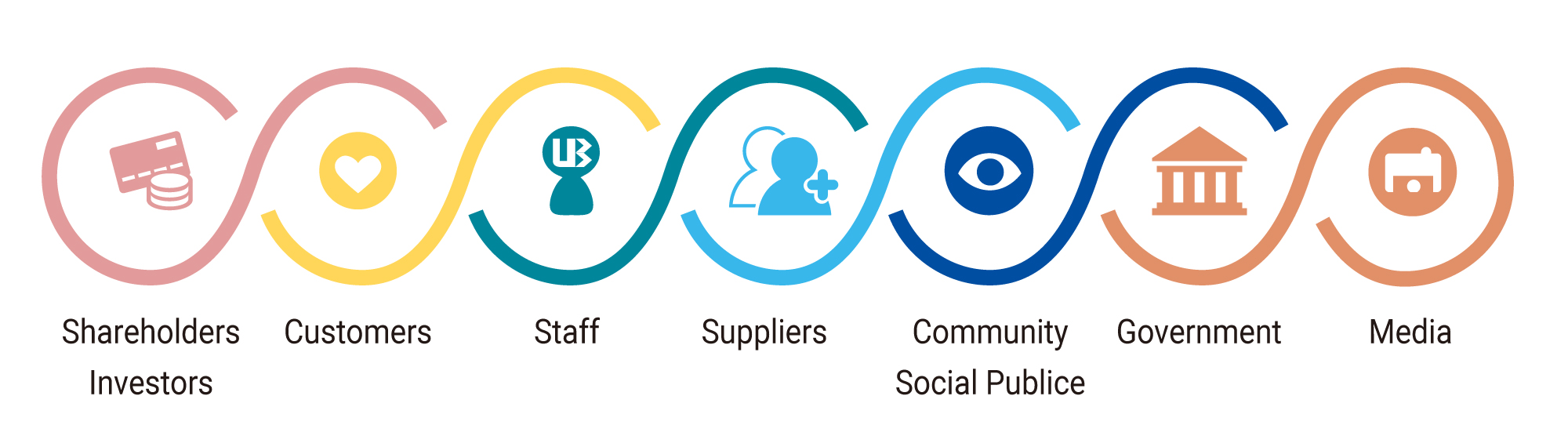
UBOT’s stakeholders primarily consist of shareholders/investors, customers, employees, partners/suppliers, community/general public, government/competent authorities, and media.
- Regarding the above stakeholders, members of the various functional groups under ESG Committee were responsible for making interaction, collecting opinions and making communication with the social public and stakeholders via various channels and platforms, including a dedicated section on UBOT's corporate website in both Chinese and English, visitor message, annual report, shareholders’ meetings, 24-hour customer service hotline and service mailbox, text customer service app, customer suggestion box, community seminars, and various social welfare activities, etc. In addition, UBOT reports the status of communication with stakeholders to the Board of Directors on a regular basis each year. The identification of stakeholders, as well as method and channels of communication with stakeholders are detailed in the following table.
- For information on Communication with stakeholders in 2024, please refer to stakeholder discussion section of the sustainability report
An identification of material topics is conducted annually according to GRI 3: Material Topics. For material topics with higher impact levels, corresponding ESG strategies and management objectives were formulated in response to stakeholders' expectations. The verification procedures for the 2025 fiscal year have obtained assurance from the independent third party, EY; please refer to the appendix for the assurance report.
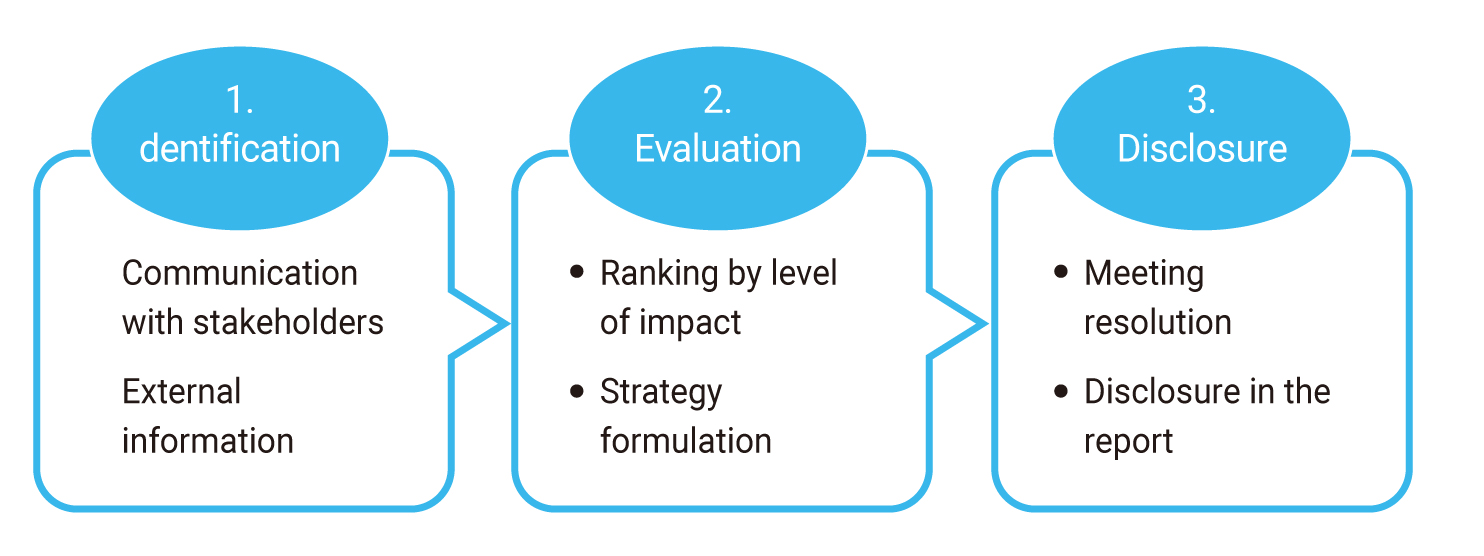 Confirmation of Material Topics
Confirmation of Material Topics
-
Analysis of Impact Materiality
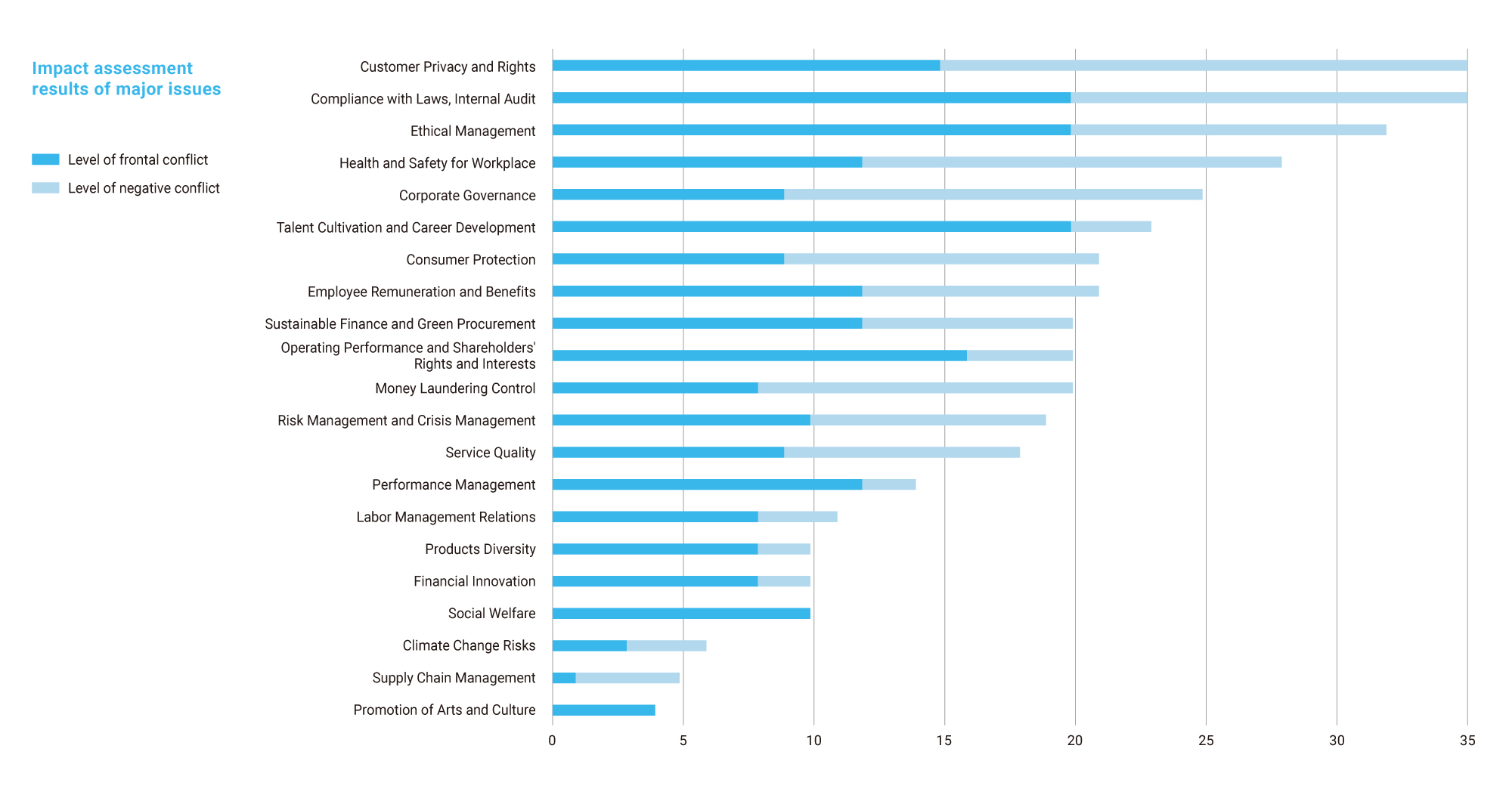
Distribute external questionnaires to survey stakeholders' level of concern regarding sustainability issues. After defining the key issues, senior executives of the Bank were invited to assess the positive and negative impacts of sustainability issues on the economy, environment, and people (human rights). The evaluation results were ranked as shown in the following chart, with the impact levels arranged from highest to lowest.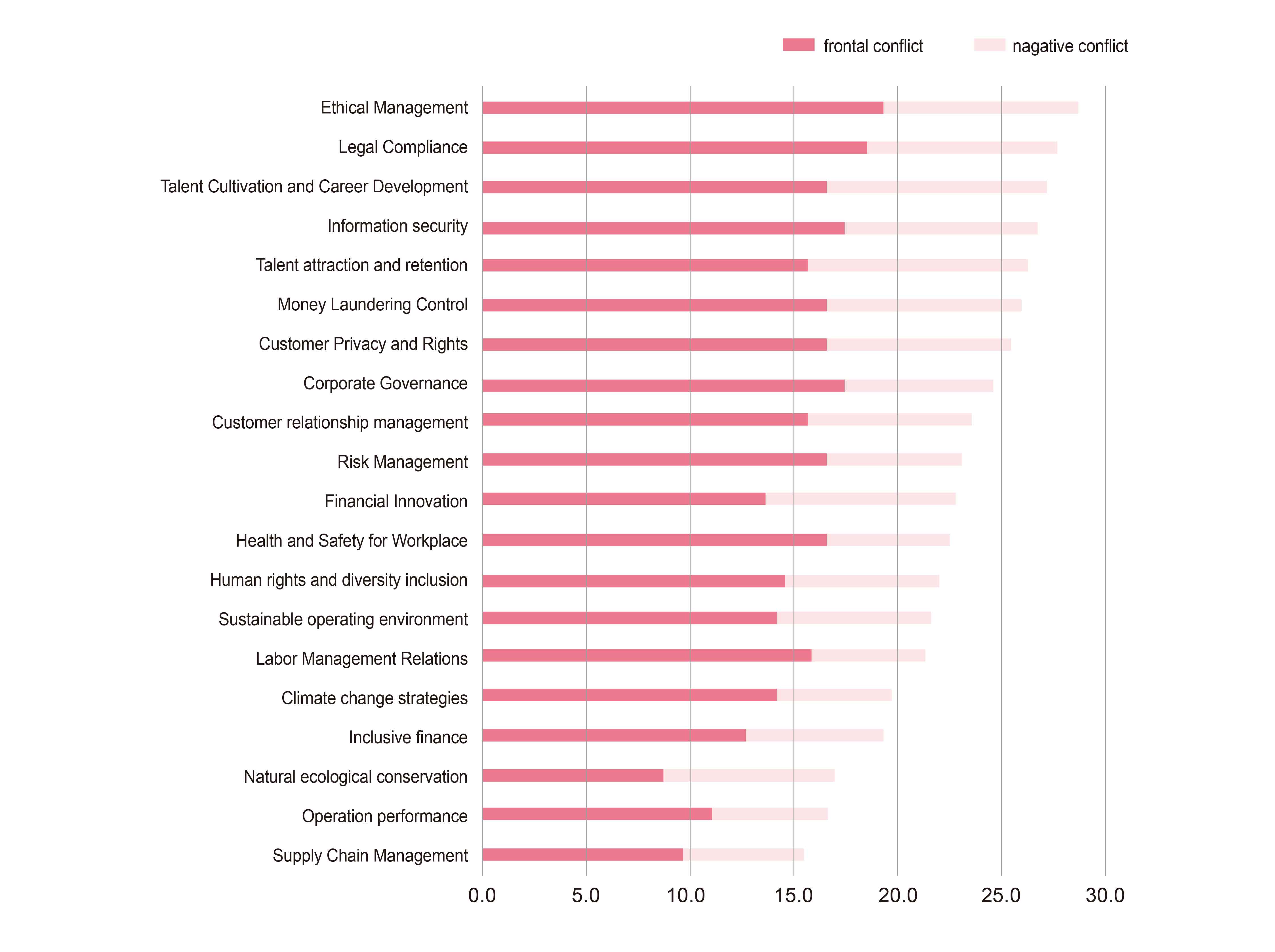
-
Double Materiality Analysis
Through the Assessment of Financial Materiality Questionnaire, senior executives of the Bank were asked to assist in evaluating the financial materiality of sustainability issues (i.e., the impact on the company's operations and degree of financial impact). By integrating the "Sustainability Impact Level" and the "Operational and Financial Impact Level," a dual materiality matrix was produced to identify topics with dual materiality that have significant impacts on both the company's financial operations and external influences. According to the analysis results, a total of 11 double materiality topics were identified in 2025, consistent with the previous year, with changes only in their relative ranking.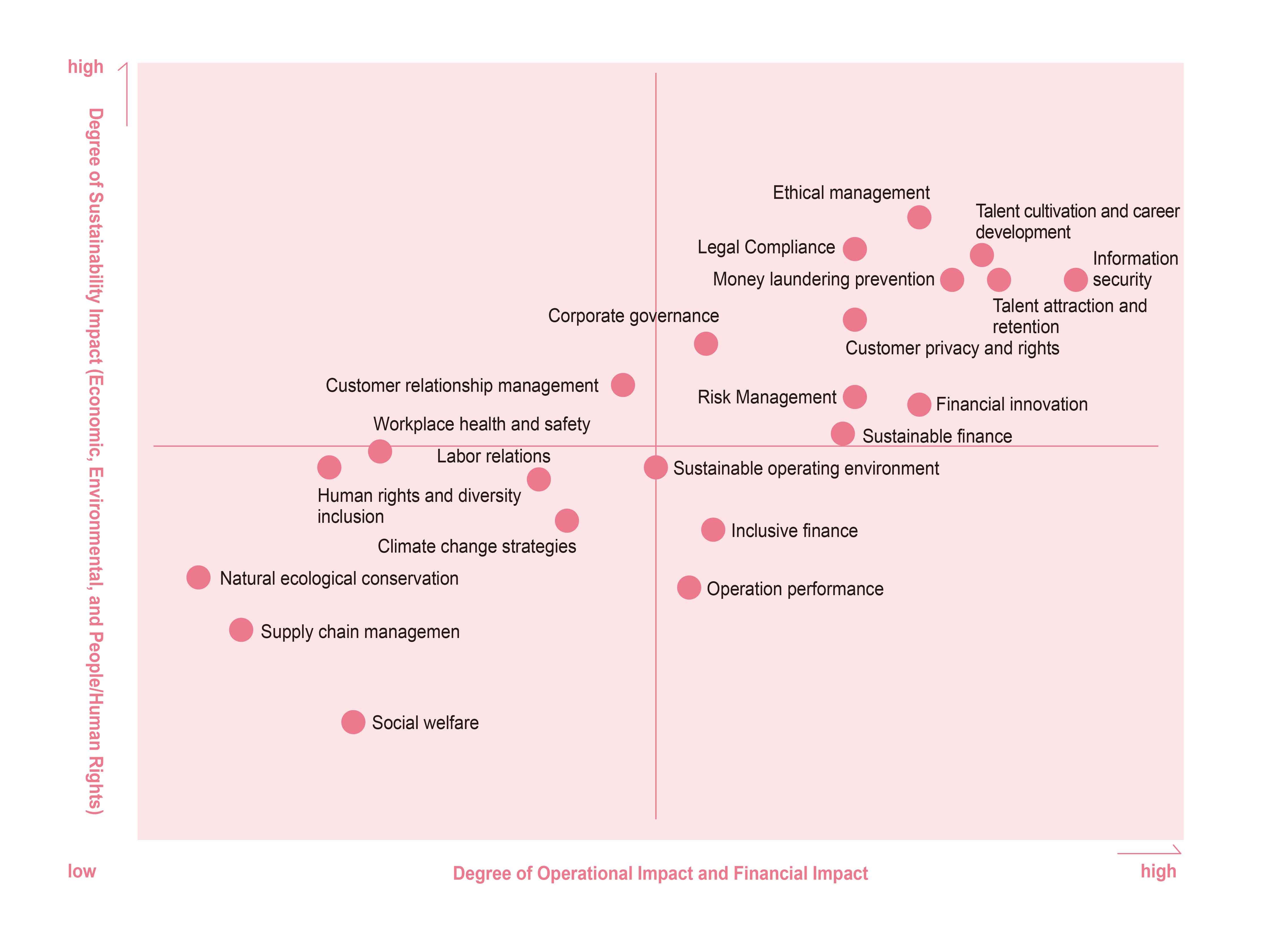
Board Diversity Policy
The Bank adopted the "Corporate Governance Code of Practice" at the 18th meeting of the 8th Board of Directors on March 18, 2015, and set out a diversity policy in Chapter 4 "Strengthening the Functions of the Board of Directors". The nomination and selection of the Bank's Board of Directors is conducted in accordance with the provisions of the Company's Articles of Association and adopts a "candidate nomination system". In addition to evaluating the academic qualifications of each candidate, the Bank also consults with stakeholders and follows the "Procedures for Election of Directors" and " Corporate Governance Best Practice Principles " to ensure the diversity and independence of board members. Pursuant to Article 29, Paragraph 1 of the Bank's "Corporate Governance Code of Practice", members of the Board of Directors should generally possess the knowledge, skills and qualities necessary to perform their duties. In order to achieve the ideal goal of corporate governance of the Bank, the Board of Directors as a whole should possess the following capabilities:
Board of Directors Register of Directors
The Bank adopted the "Corporate Governance Code of Practice" at the 18th meeting of the 8th Board of Directors on March 18, 2015, and set out a diversity policy in Chapter 4 "Strengthening the Functions of the Board of Directors". The nomination and selection of the Bank's Board of Directors is conducted in accordance with the provisions of the Company's Articles of Association and adopts a "candidate nomination system". In addition to evaluating the academic qualifications of each candidate, the Bank also consults with stakeholders and follows the "Procedures for Election of Directors" and " Corporate Governance Best Practice Principles " to ensure the diversity and independence of board members. Pursuant to Article 29, Paragraph 1 of the Bank's "Corporate Governance Code of Practice", members of the Board of Directors should generally possess the knowledge, skills and qualities necessary to perform their duties. In order to achieve the ideal goal of corporate governance of the Bank, the Board of Directors as a whole should possess the following capabilities:
- Operational judgment ability
- Accounting and financial analysis skills
- Business management capabilities
- Risk management capabilities
- Crisis management capabilities
- Industry knowledge
- International market perspective
- Leadership
- Decision-making ability
Board of Directors Register of Directors
-
Diversity and Independence of the directors and supervisors
Name Nationality Gender Professional designation and experience Diversified core program Operation judgement Corporate management Finance and accounting Industry and academic knowledge International view of market Leadership and decision-making Risk management Jeff Lin Republic of China Male V V V V V V V Zhen-Xong Jiang Republic of China Male V V V V V Yao-Hsien Li Republic of China Male V V V V V V V Tzung-Hang Lee Republic of China Male V V V V Lin-Yu Fan Republic of China Female V V V V V V Han-Ming Hsieh Republic of China Male V V V V V V Si-Yong Lin Republic of China Male V V V V V V Wen-Ming Li Republic of China Male V V V V V Herman Tu Republic of China Male V V V V V V V -
Diversity in the Board of Directors
- The Bank's policy on diversity is based on the following specific objectives and circumstances: Board members should have different professional knowledge and skills, gender and age. In order to achieve the ideal goal of corporate governance, the Board of Directors as a whole should possess the following competencies: operational judgment, business management, accounting and finance, industry knowledge, international market view, leadership decision-making, and risk management, etc. It is expected that at least three out of the total number of Board members should possess any of these competencies, and that at least four out of the seven competencies mentioned above should be possessed by individual Board members. Currently, members of the Board of Directors possess the professional qualifications listed in the table above, and have achieved the goal of diversifying their professional knowledge.
- In addition, the Bank also attaches great importance to gender equality in the composition of the Board of Directors, and has at least one or more female directors since the establishment of the Board. At present, there is one female director on the Board of Directors, accounting for 11.11%, which is in line with the Bank's plan, but in order to strengthen the diversity of directors, the proportion will be gradually increased in the future, and it is expected to achieve the ideal goal of more than one-third.
- The current age range of board members is: one (11.1%) is between 50 and 59 years old, three (33.3%) are between 60 and 69 years old, four (44.5%) are between 70 and 79 years old, and one (11.1%) is between 80 and 89 years old, thus achieving the goal of age diversity.
- Currently, three board members have served for more than 20 years (33.3%), and six have served for less than 5 years (66.7%), with an average term of 13.69 years.
-
Board Independence
The Bank has three independent directors (33.3%), two independent directors were reappointed for a second term, and one independent director assumed office in June 113th.
In order to strengthen the independence of the Board of Directors, starting from the 11th Board of Directors, the term of office of independent directors will not exceed three consecutive terms.
None of the independent directors of the Bank is also an independent director of another public company. - Diversity of directors is oriented, complementary, and implemented. In the future, the Bank will continue to update its diversity policy in a timely manner depending on the operation, business model, and development needs of the Board of Directors, including, but not limited to, the criteria for the two major aspects of basic qualifications and values, and professional knowledge and skills, so as to ensure that the Board members generally possess the knowledge, skills, and qualities necessary for the performance of their duties.
- Board related information
-
Audit Committee
Register of Independent DirectorsTitle Name of Director Experience & Qualification Independent Managing Director Yao-Hsien Li Manager of Federal Bills Finance Co. ;
Manager of UBOT Bills Finance DepartmentIndependent Director Tzung-Hang Lee the Board of Examiner ;
Visiting Scholar of University of Manchester;
Professor of Tamkang UniversityIndependent Director Lin-Yu Fan VP of , Fuh Hwa Securities Investment Trust Co., Ltd;
Jian Fuh Hwa Securities Investment Trust Co., Ltd;
Director of Union Insurance Co., Ltd. -
Information about the Audit Committee
The Audit Committee is a functional committee established under the Board of Directors. The Board of Directors, in order to improve its supervisory function and to strengthen the management function, appoints independent persons with professional backgrounds as members of the Audit Committee to assist the Board of Directors in making decisions by dividing the work into specialized roles and by taking an independent stance, so that the management's operating activities can be more effectively supervised.
In accordance with Article 14-4 of the Securities and Exchange Act, the Company established an Audit Committee on 8 June, 2016, which consists of all independent directors and has three members.
UBOT Organizational procedures of the audit committee -
Remuneration Committee
Remuneration Committee Members
Committee member Lin-Yu Fan possesses industry-academia knowledge and expertise in operational judgment, while Tzung-Hang Lee has professional expertise in information technology, e-commerce, digital economy and other fields and extensive work experience, which meet the professional capabilities required by the committee.Title Name of Director Experience & Qualification Member Lin-Yu Fan VP of , Fuh Hwa Securities Investment Trust Co., Ltd.
Jian Fuh Hwa Securities Investment Trust Co., Ltd.
Director of Union Insurance Co., Ltd.Member Tzung-Hang Lee The Board of Examiner.
Visiting Scholar of University of Manchester.
Professor of Tamkang University.Member Wen-Ming Li Taiwan Chemical Fiber Corporation Specialist.
Senior Specialist of Federal Construction Enterprise Co., Ltd.
Managing Director of E Ink Forex Brokerage Co., Ltd. -
Information about the Remuneration Committee
The purpose of the Remuneration Committee is to establish and review the policies, systems, standards and structures for the performance evaluation and remuneration of the Company's directors and managers, and to submit its recommendations to the Board of Directors for discussion.
Remuneration Committee Organizational Procedures -
Scope of Responsibilities:
To faithfully perform the following duties with the care of a good steward and to be accountable to the Board of Directors, and to submit proposals for discussion by the Board of Directors.
To establish and periodically review the policies, systems, standards and structures for performance evaluation and compensation of directors and managers.
Evaluate and set the compensation of directors and managers on a regular basis. -
Nomination Committee
Nomination Committee Members
Committee member Lin-Yu Fan possesses industry-academia knowledge and expertise in operational judgment, while Tzung-Hang Lee has professional expertise in information technology, e-commerce, digital economy and other fields and extensive work experience, which meet the professional capabilities required by the committee.Title Name of Director Experience & Qualification Member Lin-Yu Fan VP of , Fuh Hwa Securities Investment Trust Co., Ltd.
Jian Fuh Hwa Securities Investment Trust Co., Ltd.
Director of Union Insurance Co., Ltd.Member Tzung-Hang Lee The Board of Examiner.
Visiting Scholar of University of Manchester.
Professor of Tamkang University.Member Jeff Lin Director of UBOT.
Vice President of UBOT.
President of UBOT. -
Information about the Nomination Committee
Nomination Committee Organizational procedures -
Communication policy between independent directors and auditors
Communication between independent internal directors and auditors
The Chief Auditor is involved in all Board of Directors meetings and Audit Committee meetings, and reports regularly to the Audit Committee on the progress of ongoing audits. Before the end of the financial year, the internal audit department would submit in writing the next year’s audit plan for review by the Audit Committee. Furthermore, internal auditors engage independent directors in half-yearly meetings to present internal audit reports and to discuss any weaknesses found in the internal control system.
Communication between independent directors and accountants
The CPA hold regular meetings with the independent directors on a semi-annual basis on the audit method of financial reports and major audit adjustments
-
Articles of Association and Regulations
UBOT Articles of Association
UBOT Corporate Governance Best Practice Principles
UBOT Sustainable Development Best Practice Principles
-
Tax Governance Policy
UBOT Tax Governance Policy
-
Procedure Governing the Acquisition and Disposal of Assets
UBOT Procedure Governing the Acquisition and Disposal of Assets -
External auditors’ independence
The Bank's Audit Committee evaluates the independence and suitability of its assigned CPAs annually. In addition to requiring CPAs to provide the "Declaration of Independence" and "Audit Quality Indicators (AQIs)," the audit committee shall also evaluate the independence and suitability of the assigned CPAs in accordance with CPAs Independence Assessment Standards and the of AQI indicator for evaluation. It was confirmed that the CPAs have no other financial interests or business relationship with the Bank, except for the expenses of audit and taxation matters, and that the CPAs’family members do not violate the independence requirements. AQI information is used as reference to confirm that the CPAs and the firm have the training hours that are comparable to the industry average.
The evaluation results of the most recent year were discussed and approved by the Audit Committee on March 9, 2026, and were submitted to the Board of Directors' resolution on March 9, 2026.Items Assessment project Evaluation results Yes No I. There is no significant financial interest relationship with the Bank. V II. There are no financing or guarantee transactions between the Bank and its directors. V III. There is no close business relationship or potential employment relationship with this bank. V IV. The CPAs and audit service team members have not served as directors, managers or held positions that have a significant impact on the audit work in the Bank, either currently or within the past two years. V V. No non-audit services that could directly affect the audit work were provided. V VI. The Bank has not brokered any shares or other securities issued by the Bank. V VII. Did not act as the bank's defense counsel or represent the bank in coordinating conflicts with other third parties. V VIII. There is no familial relationship between the Bank and its directors, managers, or personnel who have a significant influence on the audit case. V IX. Not the stakeholder With this bank V X. Term of office for CPAs did not exceed seven consecutive years. V XI. Obtain an independence statement from The CPA regularly. V XII. Regularly obtain audit quality indicators (AQIs) information from accounting firms across the five dimensions, and assess the audit quality of accounting firms and audit teams in accordance with the "Guidelines for the Interpretation of Audit Quality Indicators (AQIs) by the Audit Committee" issued by the competent authority. V XIII. Complete quarterly and annual financial visa reports on schedule. V XIV. Complete the annual tax visa report and declaration on schedule. V XV. Provide updates on relevant tax and regulatory laws and amended IFRS accounting standards from time to time. V -
Operating procedure for internal important information & Specific implementation status of ban on insider trading
The Bank's "Internal Material Information Processing Procedures" were amended by resolution of the 11th Board of Directors at its 13th meeting on January 12, 2023. The amendments explicitly prohibit directors or employees and other insiders from trading securities using non-public information in the market. The amendments include (but are not limited to) prohibiting directors from trading their shares during the closed period of 30 days before the announcement of the annual financial report and 15 days before the announcement of each quarterly financial report.
In 2025, the Bank issued letters on February 4, April 21, July 30 and October 21 respectively, reminding its directors, managers and employees that they were prohibited from trading the Bank's shares during the closed period prior to the announcement of the annual and quarterly financial reports, in order to avoid inadvertently violating relevant regulations. -
Appointment, promotion, appraisal, salary and compensation procedures for internal auditors
The Company has an Internal Audit System, which is published in the internal system, and stipulates that the appointment, removal, promotion, rewards and punishment, rotation, and evaluation of internal auditors shall be signed by the Chief Auditor and reported to the Chairman of the Board of Directors for his/her approval. However, personnel involved in other management and business units should be approved by the President after consulting with the personnel unit in advance before signing and submitting to the Chairman for approval. Salary and compensation are handled in accordance with the “Key Points for Salary Operations” approved by the Board of Directors. -
Human Rights Due Diligence Process
The Bank has established a human rights due diligence process and has taken appropriate measures to improve the human rights impact of its business activities in order to achieve the goal of “Talent Stainability”.

-
Union Bank Of Taiwan Preventive Program against Unlawful Acts of Violence in the Performance of
Duty
The Bank has established the “Preventive Program against Unlawful Acts of Violence in the Performance of Duty” to provide employees with the opportunity to file complaints about workplace violence, workplace bullying, sexual harassment, or employment discrimination in order to maintain a safe workplace environment. A written statement on the prevention of workplace violence is publicly announced and posted in each workplace, and unit supervisors are required to fill out a form to confirm the status of potentially unlawful workplace behaviors. The supervisors are required to check and identify whether or not the behavior constitutes workplace harassment, and they are also required to perform supervisory functions to prohibit potential workplace harassment among their colleagues.
The Bank encourages employees to report all incidents of aggression or intimidation and assists in tracking them down. The rights and privacy of the victims of complaints or notifications are kept completely confidential. Upon receipt of a complaint, the department shall, depending on the type and seriousness of the case, assign appropriate personnel to set up an investigation team within three days to conduct mediation or investigation (if the complainant and the complainee agree to the mediation, they may not enter into the investigation process) and respond to the incident. If the investigation process is initiated, the investigation team should consist of at least three members, including at least two external professionals. When the investigation team meets, at least one-half of all members should attend the meeting, and at least one-half of the external professionals should attend the meeting. The investigation period should be completed within two months; if necessary, it may be extended by one month to avoid any disadvantage to the complainant or relevant personnel.At the same time, the victim is provided with job adjustment, psychological counseling, and medical and legal assistance. Upon completion of the investigation, the case is submitted to the Personnel Review Committee/Sexual Harassment Review Committee for consideration and punishment. Review the environment and job redesign after the incident. If the preventive or control measures are found to be insufficient, the implementation method or priority should be adjusted in a timely manner to identify room for improvement. -
Remuneration Policy for President and Senior Executive Vice President
The Bank's President and Senior Executive Vice President receive fixed salaries based on the Manager's Compensation Gap Table, and the Bank's President and Senior Executive Vice President receive variable salaries that are closely related to various indicators of the Bank's business performance in order to ensure the Bank's sustainable operation and development. The variable compensation is divided into short-term and long-term incentives, with short-term incentives paid in cash and long-term incentives paid in the form of 100% linked stock.-
Short-term incentive pay
* Calculated and adjusted according to individual performanceItem Calculation Indicators Weight Annual Performance Bonus Financial Indicators (Net Income After Tax, Earnings Per Share After Tax, Return on Assets) 40% Compliance and Internal Control Indicators 25% Significant Issues Indicator (top three significant issues of the year, if duplicated with other indicators, then deferred downward) 15% Risk management indicators (credit risk, market risk, climate change and environmental sustainability risk) 10% Financial Sustainability Performance Indicators 10% -
Long-term incentive pay
Item Calculation Indicators Employee remuneration allotment Earnings before taxes Performance grade
-
Short-term incentive pay
However, the first application shall be within five years after the announcement.
-
Risk Management Policy, Procedures, Scope, Organizational Structure, and Key Operations
Risk Management Policy, Procedures, Scope, Organizational Structure, and Key Operations
UBOT Risk Management Policy
Implement Financial Cyber Security Action Plan and measures to continuously enhance cybersecurity
protection, creating a secure financial service development environment. This serves as the
foundation for financial technology innovation, providing consumers with secure, convenient, and
diverse financial services.
System and Structure of Legal Compliance
The Bank has established a legal compliance system to form three defense lines together with self-audit, risk management and internal audit, and maintained effective and proper operation of the internal control system via pre-event planning, in-process monitoring and post-event verification.
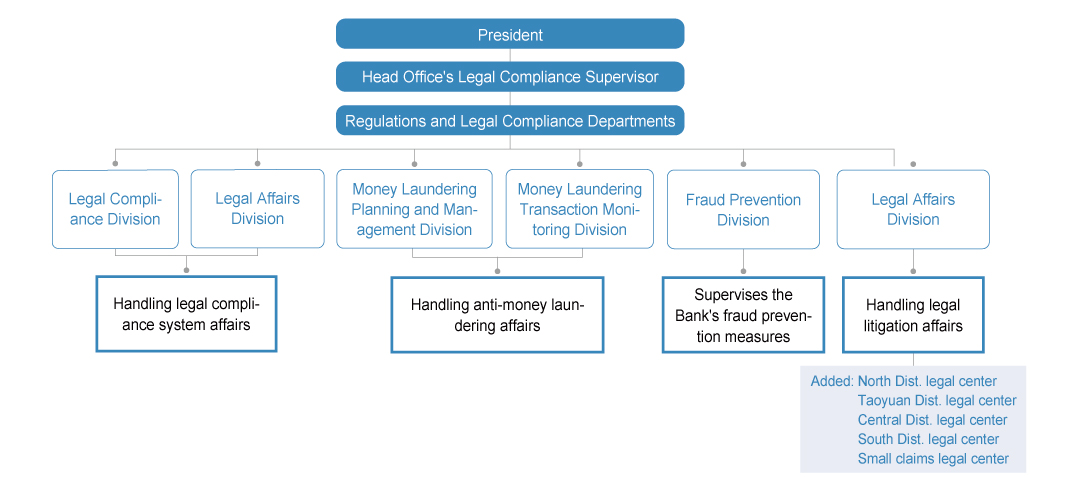
The Bank's Legal Affair & Compliance Department, which reports directly to the General Manager, serves as the Head Office's legal compliance unit. It is subdivided into the Legal Affairs Division, Legal Compliance Division, Money Laundering Planning and Management Division, Money Laundering Transaction Monitoring Division, Fraud Prevention Division, and Legal Affairs Division. The Legal Affairs Division also has several legal centers and small claims legal centers. The Head Office assigned one senior supervisor to act as the Head Office’s Legal Compliance Supervisor to be responsible for legal compliance affairs of the whole bank, and for issuing opinions conforming to laws and internal regulations. This supervisor leads the personnel of the Legal Compliance Division in jointly managing, planning, and executing the Bank's compliance system. This supervisor also concurrently holds the positions of Chief Legal Officer, Anti-Money Laundering and Counter-Terrorism Financing Officer, and Fraud Prevention Officer. Prior to the Bank launching various new goods, services and applying to the competent authority for handling new businesses, this officer affixes their signature as the responsible person.
The Head Office’s legal compliance units and each domestic unit assigned personnel conforming to legal qualifications to act as their legal compliance supervisor and to be responsible for executing legal compliance matters. They also set assistant legal compliance supervisors in various units (including the Head Office’s branches and various business centers stationed in the branches) to assist the legal compliance supervisors in handing legal compliance matters so as to convey and advocate laws effectively.
Overview and Operation Condition of Legal Compliance
The Bank has established a legal compliance system to form three defense lines together with self-audit, risk management and internal audit, and maintained effective and proper operation of the internal control system via pre-event planning, in-process monitoring and post-event verification.
The Bank's Legal Affair & Compliance Department, which reports directly to the General Manager, serves as the Head Office's legal compliance unit. It is subdivided into the Legal Affairs Division, Legal Compliance Division, Money Laundering Planning and Management Division, Money Laundering Transaction Monitoring Division, Fraud Prevention Division, and Legal Affairs Division. The Legal Affairs Division also has several legal centers and small claims legal centers. The Head Office assigned one senior supervisor to act as the Head Office’s Legal Compliance Supervisor to be responsible for legal compliance affairs of the whole bank, and for issuing opinions conforming to laws and internal regulations. This supervisor leads the personnel of the Legal Compliance Division in jointly managing, planning, and executing the Bank's compliance system. This supervisor also concurrently holds the positions of Chief Legal Officer, Anti-Money Laundering and Counter-Terrorism Financing Officer, and Fraud Prevention Officer. Prior to the Bank launching various new goods, services and applying to the competent authority for handling new businesses, this officer affixes their signature as the responsible person.
The Head Office’s legal compliance units and each domestic unit assigned personnel conforming to legal qualifications to act as their legal compliance supervisor and to be responsible for executing legal compliance matters. They also set assistant legal compliance supervisors in various units (including the Head Office’s branches and various business centers stationed in the branches) to assist the legal compliance supervisors in handing legal compliance matters so as to convey and advocate laws effectively.
Overview and Operation Condition of Legal Compliance
-
Legal Compliance Policies
The legal compliance policies verified by the Board of Directors were the bank-wide supreme guidelines of the Bank’s legal compliance system, and the Board of Directors would make review annually to monitor effectiveness of legal compliance functions. They also grasp implementation condition of the Bank’s legal compliance function via annual legal compliance plan and report on implementation of legal compliance affairs of the whole bank every half year.
Union Bank of Taiwan Compliance Policy -
Promotion of the Legal Compliance System
1.The Bank followed up the latest legal dynamics, and revised its internal regulations appropriately.
The legal compliance units would collect the latest legal regulations on finance every week, and then convey to various units effectively upon summary and arrangement so as to enable the staff to figure out their doubts toward the laws and regulations quickly. They would also assist with various departments in confirming that all operation and management regulations are updated appropriately in cooperation with relevant laws, and supervise the implementation, establishment, and enforcement of internal regulations by legal compliance officers of each unit, thus making the Bank’s operation activities conform to legal regulations and strengthening the legal understanding of Bank personnel.
In addition to including external regulatory documents applicable to various business operations of the Bank, the financial regulations database also contains internal rules and electronic official documents established by the Bank's head office units. The content of the financial regulations database is regularly updated for use by all bank employees, thereby strengthening the Bank's legal compliance function through legal compliance technology.
2.Complete legal compliance training and education
(1)The Bank’s Head Office’s legal compliance supervisor, members of the Head Office’s legal compliance units and various domestic units’ legal compliance supervisors have obtained legal qualifications before taking post. Besides, they should also participate in on-the-job education and training courses on legal compliance held by the competent authority, its designated institution or the Bank itself for at least 15 hours every years to guarantee that they are equipped with the ability to perform the legal compliance mechanism, thus assisting with the senior supervisors in managing the Bank’s legal compliance risks. In 2024, 132 people completed the training for a total of 1,980 training hours.
(2)Regarding new staff, on-the-job staff, senior supervisors and the above-mentioned legal compliance supervisors and staff, the Bank introduced legal compliance courses and communicated and promoted any updates or amendments to regulations at all times, so as to enable all units to grasp the latest standards and comply with regulations. In 2024, 15,515 people completed the training for a total of 1,980 training hours.
(3)To strengthen employees' compliance with service regulations and enhance the correct understanding of legal concepts among employees at all levels, in addition to focusing on promoting risk awareness regarding ethical conduct for senior personnel during manager meetings, the aforementioned physical and online educational courses for newly recruited employees were also incorporated, as well as an online educational course for on-the-job training in legal compliance. A total of 4,291 participants attended these courses, accumulating a total of 15,717 training hours. -
Legal Compliance Risk Monitoring and Appraisal System
A self-assessment of legal compliance is conducted every six months, and the compliance unit performs spot checks on legal compliance every year. The compliance status of each unit is evaluated, and the appraisal results are reported to the Board of Directors and the Audit Committee.
In 2024, the entire bank conducted two self-assessment operations on regulatory compliance. Additionally, one annual regulatory compliance spot check was carried out, which included spot checks of 3 head office units and 90 business units.
The Bank incorporated sustainability-related issues in 2024, including the Code of Practice for Sustainable Development of Listed and Sustainable Development Action Plans for TWSE- and TPEx-listed Companies, into the compliance self-assessment items for verification. The verification results showed no deficiencies. In 2025, the Bank conducted a self-assessment of legal compliance for the first half year on May 12th, also including the "Guidelines for Preventing Greenwashing for Financial Institutions" and the "Guidelines on Carbon Reduction Target Setting and Strategy Planning for the Financial Sector”. The verification results showed no deficiencies.
-
System and Structure
The Bank recognizes the importance of compliance with laws related to anti-money laundering and combating the financing of terrorism. We are committed to preventing our institution from becoming a source of money laundering and terrorist financing. Accordingly, we have established internal regulations including the "Precautions of Union Bank for Money Laundering Control and Combating Terrorist Financing," "Union Bank's Evaluation of Money Laundering and Terrorist Financing Risks and Formulation of Prevention Plan Policy," and the "Union Bank Comprehensive Risk Assessment and Management Measures for Money Laundering and Terrorist Financing." These measures aim to establish a comprehensive anti-money laundering system to prevent the misuse of money laundering and terrorist financing activities.
The Bank allocates adequate personnel and resources dedicated to anti-money laundering and counter-terrorism financing according to its scale and risk profile. Under the Head Office's legal compliance unit, independent specialized units have been established, including the Money Laundering Planning and Management Division, the Money Laundering Transaction Monitoring Division, and the Fraud Prevention Division. The Head Office's Legal Compliance Supervisor serves as the dedicated supervisor, vested with full authority to coordinate and oversee anti-money laundering and counter-terrorism financing efforts. -
Internal Control and Internal Audit Regulations for Compliance with Anti-money Laundering
Laws
1.The business units and the Head Office business management units serve as the first line of defense in anti-money laundering efforts, specifically implementing controls related to anti-money laundering and combating the financing of terrorism. Senior management personnel should be appointed as supervisory officers, responsible for overseeing the execution of anti-money laundering and counter-terrorism financing measures within their respective units, as well as managing the self-evaluation process.
2.The primary responsibilities of the dedicated unit are to supervise the prevention of money laundering and the combatting of terrorist financing, to identify and assess the risks of money laundering and terrorist financing, and to monitor the planning and implementation of policies and procedures.
3.The Audit unit conducts inspections of management systems and execution deficiencies in accordance with the "Implementation Rules of Internal Audit and Internal Control System of Financial Holding Companies and Banking Industries." It also regularly reports to the Chief Auditor and the Deputy Director responsible for anti-money laundering and counter-terrorism financing. -
Work Overview
1. Customer Due Diligence
In addition to conducting identity verification, name checks, and risk assessments through the business unit's customer relationship establishment procedures, customer data is also subjected to daily batch scanning via the Anti-Money Laundering (AML) system. Furthermore, relevant regulations have been established to enhance the accuracy of manual verification.
2. Suspicious Transactions Monitoring
Regarding transaction monitoring for existing customers, an Anti-Money Laundering (AML) system has been implemented. This system is utilized to detect abnormal transactions involving customers and accounts. Monitoring effectiveness and intensity have been enhanced through strengthened regulations and the integration of technological applications.
3. Reporting of Large-value and Suspicious Transactions
In response to alert cases generated by the AI early warning system and suspicious abnormal transaction behaviors identified by business units in customers suspected of money laundering, the Bank's suspicious transaction reporting operations have been fully centralized. Dedicated personnel are responsible for conducting customer background investigations, confirming abnormal behaviors, and reporting cases, with the aim of improving the quality of reported cases and reducing omissions in reporting.
4. Fraud Prevention
In response to the increasing emphasis by competent authorities on anti-fraud measures within financial institutions, the Bank established an interdepartmental Fraud Identification Task Force in 2024, chaired by the General Manager. This task force convenes weekly project meetings focused on optimizing fraud identification and prevention workflows. During these meetings, in addition to continuously monitoring the progress of various optimization topics, adjustments are made dynamically to fraud prevention-related issues to enhance the effectiveness of suspicious account monitoring alerts and improve interception accuracy. Furthermore, to support the crackdown on fraud crimes through professional, organized, and sustained efforts, the Bank established the "Fraud Prevention Division" within the Legal and Compliance Department in the first quarter of 2025. This division is responsible for overseeing all fraud crime prevention matters across the bank. Concurrently, the task force was renamed the "Union Bank Financial Fraud Prevention Task Force."
The task force is primarily composed of members from the Bank's Fraud Prevention Division (dedicated unit) and business units related to fraud prevention operations. The task force convenes weekly meetings to oversee and manage the Bank's fraud crime prevention measures, track the progress of projects related to fraud crime prevention, and coordinate the responsibilities of various units concerning fraud crime prevention operations. -
Educational Training
Regarding the training and education of personnel in anti-money laundering and counter-terrorism financing, the Bank continues to enhance employees' professional knowledge in anti-money laundering, fraud prevention, and counter-terrorism financing. The specific implementation results for 2024 are as follows:
1. The Head Office management unit plans for a 100% training completion rate in the annual anti-money laundering education courses for its affiliated business personnel.
2. The dedicated personnel and managers responsible for money laundering prevention, with the consent of the dedicated supervisors, participated in on-the-job education and training provided by external training units for a total of 12 hours. The training attendance rate was 100%.
3. The attendance rate for the "Anti-Money Laundering and Counter-Terrorism Financing On-the-Job Training Course" conducted for directors and senior management was 100%.
4. The dedicated unit conducts a quarterly "Anti-Money Laundering - Know Your Customer" workshop. The course content includes explanations of various customer due diligence procedures, name verification, and methods for identifying and verifying beneficial owners and Politically Exposed Persons (PEPs). In 2024, a total of eight in-person courses were held across the northern, central, and southern regions, with a total of 228 participants attending.
5. The Bank enhanced the professional knowledge of all employees through online courses in regulations related to anti-money laundering and anti-fraud measures, as well as the improvement of identified deficiencies. In 2024, a total of 3,674 employees completed the training.
Development of the enterprise culture of ethical management, all directors and senior management
have signed off on the compliance with ethical management policies, and actively implement the
commitment to the integrity management policy and supervise the actual implementation of the
company's internal management and business activities.
-
Integrity management related
Code of Ethical Conduct for Directors and Managerial
Code of Ethical Management and Behavioral Guidelines -
Fair Treatment of Customers Philosophy
Union Bank of Taiwan has established a corporate culture centered around the philosophy of "Fair Treatment of Customers." To protect customer rights and interests, and in accordance with the Treating Customers Fairly Principles for Financial Institutions issued by the Financial Supervisory Commission, the Bank has formulated the Fair Treatment of Customers Policy and Strategic Implementation Steps. This provides guidance for the three lines of defense in implementing fair treatment principles, and is regularly reviewed and revised to ensure that the Bank treats customers fairly when providing various financial products or services. In addition, to provide more customer-friendly products and quality services that better meet customer needs, the Bank reviews, makes recommendations, and tracks improvements on financial inclusion service policies and their implementation based on customer feedback, while continuously optimizing various financial products and services. Furthermore, the Fair Treatment of Customers system has been incorporated into compliance training courses, with both online and in-person courses being offered. Through educational promotion, these courses enhance employees' awareness and professional knowledge of regulatory compliance and fair treatment of customers. This ensures that employees treat customers fairly and reasonably when conducting business, allowing customers to experience the Bank's care and dedication, thereby increasing customer confidence in the Bank. -
Ten Principles of Fair Treatment of Customers

-
Contracting with Fairness and Integrity:
The responsibilities owed to customers cannot be contractually limited or exempted in advance.
Contracts for providing financial products or services should be established based on principles of fairness, reasonableness, mutual benefit, and good faith.
Any ambiguity in contract terms should be interpreted in favor of the customer. -
Care and Loyalty:
When providing financial products or services, the manager should ensure they are acting in the best interests of the customer.
When entering into agreements with customers for products or services of a fiduciary, entrusted, or similar nature, fiduciary duties should be fulfilled in accordance with applicable regulations or contractual agreements.
Financial or transaction-related information of customers should be kept confidential from third parties, except as otherwise provided by other laws or regulatory authorities. -
Truthful Advertising:
When publishing or broadcasting advertisements and conducting business promotion or sales activities, there shall be no false, fraudulent, concealing or other misleading actions. Specific information should be disclosed according to relevant regulatory requirements to ensure the truthfulness of the advertising content.
The obligations owed to the customer shall not be less than what is stated in advertisements, materials, or explanations provided.
The promotion of financial education should not be used to recommend specific financial products or services. -
Product or Service Suitability:
Before establishing contracts for financial products or services, sufficient understanding of customer information should be obtained to ensure the suitability of such products or services for the customer.
The first sale of high-risk complex products should be approved by the Board of Directors or Executive Board of Directors. -
Notification and Disclosure:
Before establishing contracts for financial products or services with customers, the important contents of such contracts and their associated risks should be fully explained and disclosed to the customer.
For matters involving the collection, processing, and use of customer personal data, customers should be fully informed of their relevant rights regarding personal data protection and the potential disadvantages of refusing consent.
Explanations and disclosures to customers should be made in writing or other formats that customers can fully understand, and the content should include, but not be limited to, important matters concerning customer rights such as transaction costs, potential returns, and risks.
When selling high-risk complex products, records of notification of important contract content and risk disclosure should be kept through audio or video recording, except for automated non-counter channel transactions or cases where the customer does not consent. -
Compensation and Performance Balance:
The compensation system for sales staff should balance and consider factors such as customers’ interests, the various risks that financial products or services may pose to both the Bank and its customers, and the fees charged. It should avoid direct links to the sales performance of specific financial products or solely considering the achievement of sales targets of sales staff. -
Complaint Protection:
The Bank provides appropriate complaint channels for customers and establishes a comprehensive customer dispute resolution system. -
Sales Staff Professionalism:
The Bank's sales staff should possess certain qualifications or participate in regular educational training to ensure their professionalism. -
Friendly Service:
Throughout all stages of designing and selling financial products and services, including conceptualization, development, testing, launching, sales, and review, the needs of specific groups such as the elderly and people with disabilities should be considered.
Plan and implement measures for the fair treatment of specific groups such as the elderly and people with disabilities according to business characteristics. Monitor and evaluate the financial products or services provided to ensure they meet customer needs, and review the effectiveness of processes and regulations for fair treatment of the elderly and disabled customers. Encourage each unit to establish policies, strategies, and internal regulations that exceed current legal requirements to promote sustainable innovation and inclusive financial services. -
Implementation of Ethical Management
Ethical management culture should be promoted from the top down, with related measures planned and implemented, such as an employee code of conduct, conflict of interest prevention measures, appropriate whistleblowing channels, relevant education and training, comprehensive risk management measures, assessment mechanisms for dishonest behavior risks, clearly defined operational procedures in dishonesty prevention programs, disciplinary and grievance systems for violations, implementation and regular review and revision of the aforementioned programs.
An effective accounting system and internal control system should be established, and the Audit Department should formulate relevant audit plans based on the risk assessment results of unethical behavior. These plans should be used to audit compliance with dishonesty prevention programs, or a certified public accountant may be entrusted to perform the audit.
-
Contracting with Fairness and Integrity:
-
Fair Treatment of Customers Management Committee Organizational Structure
Under the Board of Directors, Union Bank of Taiwan has established the Fair Treatment of Consumers Management Committee as the main organization for planning, reviewing, and implementing fair customer treatment issues. The President serves as the convener, and independent directors are invited to attend and provide guidance. Meetings are held regularly, and reports are submitted to the Board of Directors.

-
Union Bank of Taiwan Sustainable Financial Policy
UBOT Sustainable Financial Policy -
Sustainable development bonds and fund investments
The details of our investment in New Taiwan Dollar bonds approved by the Taiwan Securities OTC Trading Center for Green Bonds are as follows:
Bond Name:TSMC 3rd Unsecured Corporate Bond in 2026- Tranche A (Short Name:P15台積3A,Bond Code:B618ED) NT$100million.
Bond Name:TSMC 2nd Unsecured Corporate Bond in 2026- Tranche A (Short Name:P15台積2A,Bond Code:B618EB) NT$300million.
Bond Name:TSMC 3rd Unsecured Corporate Bond in 2025- Tranche B (Short Name:P14台積3A,Bond Code:B618E2) NT$200million.
Bond Name:Yuanta Bank 1st Unsecured Financial Debentures in 2024(Short Name:P13元大銀1,Bond Code:G10832) NT$300million.
Bond Name:TAIWAN POWER COMPANY 4TH UNSECURED BOND-B ISSUE IN 2020(Short Name:P09台電4B,Bond Code:B903XL) NT$200million.
Bond Name:TSMC 6th Unsecured Corporate Bond in 2020-Tranche B(Short Name:P09台積6B,Bond Code:B618C4) NT$300million.
The total investment balance of ESG funds is US$3.25 million. -
Issuance of Sustainable Bonds
Union Bank of Taiwan issued the first Sustainability bond (Short Name:P14聯邦1,Bond Code:G10924) in August 2025 with a total amount of NT$1 billion.
We have been continuously developing innovative digital financial services, optimizing the digital
financial service platform, and actively promoting electronic transactions and services, we also
encourage our customers to apply for electronic bills. Through these paperless actions, we hope to
achieve the goals of environmental protection, energy conservation and carbon reduction.
Inclusive Finance Statement
In response to the United Nations Sustainable Development Goals (SDGs) and the Inclusive Finance Initiative. The Board of Directors of the Bank issued a statement on inclusive finance and followed this statement to promote financial products and services with the aim of satisfying groups lacking financial services and realizing the vision of inclusive finance, so as to reduce the gap between rich and poor, promote social equity and achieve inclusive growth.
UBOT Inclusive Finance Statement
Inclusive Finance Statement
In response to the United Nations Sustainable Development Goals (SDGs) and the Inclusive Finance Initiative. The Board of Directors of the Bank issued a statement on inclusive finance and followed this statement to promote financial products and services with the aim of satisfying groups lacking financial services and realizing the vision of inclusive finance, so as to reduce the gap between rich and poor, promote social equity and achieve inclusive growth.
UBOT Inclusive Finance Statement
In order to treat employees fairly and protect their rights and interests, the Bank has established
the “Employee Performance Appraisal Program” whereby the supervisors of each level will approve the
performance appraisals of employees at the end of each year based on various financial and
non-financial indicators, and the appraisal results will be used as the basis for promotion, salary
adjustment, and performance bonus allocation through self-assessment by employees and performance
interviews with supervisors. For business personnel, performance bonuses are paid in accordance with
the methods established by each business grade, such as the “Regulations for the Evaluation of
Wealth Management Department Personnel” and the “Regulations for the Appointment, Removal,
Promotion, and Promotion Evaluation of the Consumer Financial Services Customer Service Specialist”
for monthly/quarterly evaluations of performance and non-financial indicators. For the rest of the
staff, if there is a profit in the annual financial statements each year, the Board of Directors
will consider the operating performance of each grade in the year and approve the unit performance
bonus according to the bonus rules set by each grade, such as the “Business Unit Performance
Assessment Rules” and the “Key Points of Head Office Management Unit Assessment”, and then the
supervisors will adjust the allocation according to the individual performance. In addition, the
“Regulations for Handling Employee Reward and Punishment Cases” has been formulated to convene
meetings at any time to review reward and punishment cases, and to increase the deduction of bonuses
and restrict the appraisal grade according to the reward and punishment situations, in order to
establish a fair appraisal, reward, and punishment system and to safeguard the rights and interests
of the employees and the overall discipline.
In order to increase employee centripetal force and encourage employee retention, long-term incentive measures are implemented:
˙In accordance with the Bank's Articles of Incorporation, if there is a profit in the annual financial statements, the Company makes appropriations for employee stock dividends and distributes them to employees who have been in the Company for at least two years, and the ratio distributed to grassroots employees shall not be less than 50% of the total distribution amount.
˙A commemorative watch and a crystal trophy will be presented to employees who have reached their 20th and 30th anniversaries of service, and each employee will be recognized at the Head Office's tailgate event.
Employees who have been working for more than one year can apply for transfer by filling out the “Employee Volunteer Service Area Survey Form” in order to immediately understand the inner thoughts and actual needs of employees, so that the balance between rotation and life can be achieved and the functional development of employees can be improved. An employee current job satisfaction survey is conducted on the internal website at the end of each year. Previously, satisfaction surveys focused solely on current positions. Starting in 2025, the survey encompasses five key dimensions: job responsibilities, compensation and benefits, development and learning opportunities, supervisor and organizational atmosphere, and overall satisfaction. The survey targets employees undergoing performance evaluations, achieving a 94.5% coverage rate and a 97.3% satisfaction rate. Specifically, female satisfaction stands at 97.4% and male satisfaction at 97.2%.Survey results indicate the highest satisfaction with job responsibilities, while satisfaction with compensation and benefits remains relatively low. We will continue to optimize and improve aspects such as the fairness of salary and benefits and the clarification of promotion pathways. This initiative aims to enhance employee satisfaction, strengthen employee loyalty, and boost overall operational efficiency, thereby building a more cohesive and sustainable organization.
In 2025, the bank conducted a total of 54 health promotion seminars, attracting 1,514 participants. Topics covered included first aid skills, exercise health, and common health risks. Among these, 12 sessions focused on first aid and 18 on exercise-related topics, with a cumulative attendance of 673 participants. Through systematic promotion of health education, we assist employees in enhancing their health literacy, strengthening their awareness of health risk factors and ability to respond to them, and encouraging proactive attention to personal health, thereby fostering a positive workplace health culture.
In order to increase employee centripetal force and encourage employee retention, long-term incentive measures are implemented:
˙In accordance with the Bank's Articles of Incorporation, if there is a profit in the annual financial statements, the Company makes appropriations for employee stock dividends and distributes them to employees who have been in the Company for at least two years, and the ratio distributed to grassroots employees shall not be less than 50% of the total distribution amount.
˙A commemorative watch and a crystal trophy will be presented to employees who have reached their 20th and 30th anniversaries of service, and each employee will be recognized at the Head Office's tailgate event.
Employees who have been working for more than one year can apply for transfer by filling out the “Employee Volunteer Service Area Survey Form” in order to immediately understand the inner thoughts and actual needs of employees, so that the balance between rotation and life can be achieved and the functional development of employees can be improved. An employee current job satisfaction survey is conducted on the internal website at the end of each year. Previously, satisfaction surveys focused solely on current positions. Starting in 2025, the survey encompasses five key dimensions: job responsibilities, compensation and benefits, development and learning opportunities, supervisor and organizational atmosphere, and overall satisfaction. The survey targets employees undergoing performance evaluations, achieving a 94.5% coverage rate and a 97.3% satisfaction rate. Specifically, female satisfaction stands at 97.4% and male satisfaction at 97.2%.Survey results indicate the highest satisfaction with job responsibilities, while satisfaction with compensation and benefits remains relatively low. We will continue to optimize and improve aspects such as the fairness of salary and benefits and the clarification of promotion pathways. This initiative aims to enhance employee satisfaction, strengthen employee loyalty, and boost overall operational efficiency, thereby building a more cohesive and sustainable organization.
In 2025, the bank conducted a total of 54 health promotion seminars, attracting 1,514 participants. Topics covered included first aid skills, exercise health, and common health risks. Among these, 12 sessions focused on first aid and 18 on exercise-related topics, with a cumulative attendance of 673 participants. Through systematic promotion of health education, we assist employees in enhancing their health literacy, strengthening their awareness of health risk factors and ability to respond to them, and encouraging proactive attention to personal health, thereby fostering a positive workplace health culture.
- The Company promotes the policy of workplace diversity to realize the diversity of employment and fairness of salary and promotion opportunities, and all policies do not discriminate on the basis of gender, sexual orientation, race, class, age, marriage, language, ideology, religion, party affiliation, nationality, place of birth, appearance, facial features, physical or mental handicap, or any form of discrimination.In 2025, 63.3% of the employees were female and 53% of the supervisors were female; 24.2% of the employees were under 30 years old, 52% were over 30 years old and under 50 years old, and 23.8% were over 50 years old; and in accordance with the provisions of the “Law for the Protection of Rights and Interests of Persons with Physical and Mental Disabilities”,15 employees with disabilities have been hired.
- The Employee Welfare Committee has been established and contributes 0.5% of the employees' salaries and 0.1% of the employees' operating revenues to the Employee Welfare Committee for the purpose of handling employee welfare matters, such as giving annual bonuses, organizing Mother's Day parties, and providing subsidies for marriages, funerals, births (including those of spouses), and major natural disasters.
- In order to promote family care benefits and in line with the Labor Standards Act, physiological leave, maternity leave, paternity leave, paternity leave, and abortion leave have been established; employees may apply for leave without pay for childcare before their children reach the age of 3. The Bank has also set up a breastfeeding room to provide a quality breastfeeding environment for its female colleagues.
- Processes employee preferential deposits, employee preferential guaranteed loans and unsecured consumer loans.
- The Bank provides group insurance (including term life insurance, group injury insurance, work-related injury insurance, occupational disaster insurance, cancer health insurance, and hospitalization and medical insurance for employees and their dependents) in accordance with the social insurance system.
- The Bank has established a retirement plan for its employees and set up a Labor Retirement Reserve Supervisory Committee. 2%~15% of the reserve fund is deposited in the Trust Department of the Bank of Taiwan in order to protect the rights and interests of the laborers, and the Bank will pay a pension to any employee who applies for the retirement system under the Labor Standards Law, and whose seniority meets the requirements for retirement under the Labor Standards Law or the Bank's work rules. The Labor Pension Act came into effect on July 1, 2005, and the Bank contributes 6% of the employees' monthly pension to the employees' individual pension accounts in accordance with the Act.
- The Bank has established a Labor and Employee Meeting Regulations to maintain harmonious labor relations at all times.
- UBOT Occupational Safety and Health Guidelines
- UBOT Occupational Safety and Health Management Regulations
-
Human Rights Policy
UBOT Human Rights Policy - Guidelines on Sexual Harassment Prevention, Complaints, and Investigation Handling
- Human Rights Protection and Due Diligence Report
-
Talent Development
In response to the rapid changes in financial technology, the digital economy, and ESG (Environmental, Social, and Governance) trends, we have implemented a talent development program that provides intensive employee training courses. This initiative aims to streamline operational processes, enhance customer service levels, and cultivate well-rounded financial service professionals, ultimately strengthening employee competitiveness and promoting corporate sustainability. -
Training Overview
Category Internal Training External Training Digital Learning Total Number of Trainees (instances) 14,556 5,870 62,569 82,995 Training Expenses (NTD) 9,561,023 5,548,925 185,400 15,295,348 -
Training System
Employee Development Training SeriesTarget Audience Reserved Managers Middle Managers New Employees Course Advanced Management Talent Program Cross-Generational Communication & Leadership Seminars Pre-Employment Training for New Bankers Duration 168 hours 15.5 hours 406 hours Participants 21 employees 184 employees 581 employees -
Employee Professional Training Series
- Internal Audits & Controls
- Anti-Money Laundering
- Regulatory Compliance
- Business-related Training
- Information Security
- Digital Finance
- Fair Customer Treatment
- Sexual Harassment Prevention
-
Sustainable Finance
Category Beginner Level Intermediate Level Digital Learning Target Audience Business Unit Operators Experienced Personnel All Employees Participants 1,202 630 3,881
-
Learning Maps by Job Function
-
Deposits & Remittances
-
Introductory Level
Deposits & Remittances Operations (Basic) -
Intermediate Level
AML System and Anti-Money Laundering: Customer Due Diligence Training Course -
Advanced Level
Deposits & Remittances Operations (Intermediate)
-
Wealth Management
-
Introductory Level
Wealth Management Training (Basic) -
Intermediate Level
Wealth Management Training (Intermediate) -
Advanced Level
Wealth Management Training (Advanced)
-
Corporate Finance Officers
-
Introductory Level
Credit Investigation & Loan Approval (Basic) -
Intermediate Level
Credit Investigation & Loan Approval (Intermediate)
-
Corporate Finance AO Assistants
-
Introductory Level
Practical Training for Corporate Finance AO Assistants (Basic) -
Intermediate Level
Practical Training for Corporate Finance AO Assistants (Intermediate) -
Advanced Level
Practical Training for Corporate Finance AO Assistants (Advanced)
-
Introductory Level
-
Employee Training Statistics (Year 2025, including digital learning)
Note: Average Training Hours per Employee = Total Training Hours / Total ParticipantCategory Type Sessions Total Participants Total Training Hours Average Training Hours per Employee Internal Training Professional Courses 201 61,537 201,385 3.27 Pre-Employment Training 8 313 2,420 7.73 Occupational Safety 1 3,836 3,836 1.00 Subtotal 210 65,686 207,641 3.16 External Training Professional Courses 466 9,128 31,406 3.44 Corporate Governance 6 58 174 3.00 ESG 23 7,639 13,252 1.73 Occupational Safety 92 451 3,164 7.02 Leadership Training 11 33 3,619 109.67 Subtotal 598 17,309 51,615 5.39 Total 808 82,995 259,256 3.12 -
Average Employee Training Hours
Year 2025 - Average Training Hours Male Female Total Hours Average Hours Position Management Level 63.49 77.18 47,604 70.73 Non-Management Level 64.04 65.75 211,652 65.16 -
Employee Professional Certification Statistics
Total Employees: 3,922Certification Type Quantity Financial Certifications 22,438 Sustainability 1,611 Non-Financial Certifications 1,268 Language Proficiency Certifications 59 Total 25,376
Average Certifications per Employee: 6 -
Effectiveness of Training Programs
Advanced Management Talent Program-
Diverse Courses:
- Next-Gen Leadership Development
- Communication & Presentation Skills
- Corporate Management & Social Responsibility
- Talent Management
-
Professional Courses:
- Report Analysis
- Financial Business Project Studies
- Anti-Money Laundering Case Studies
-
Sustainability Courses:
- Green Energy Industry Development
- Carbon Credit Trading
- Green Electricity
-
Digital Finance:
- ChatGPT
- AI Evolution
- AI Applications in Banking
- iPASS Data Empowerment
- Big Data Applications
- Industry Visits
- Provided a clearer vision for the bank’s future development
- Enhanced self-value and professional capabilities
- 21 participants completed training in Year 2025, with 9.5% promoted to managerial roles
-
Diverse Courses:
-
Healthy & Safe Workplace
- Established “Workplace Safety and Health Guidelines” and “Occupational Health and Safety Regulations”
- Continuously improving workplace safety and hygiene conditions to reduce occupational hazards and safeguard employees' physical and mental well-being Key Initiatives:
- Conducted 28 on-site professional medical consultation sessions
- Employee health care initiatives covered 1,756 employees
- Conducted a bank-wide musculoskeletal symptom survey with 4,476 responses (100% completion rate), including 4,445 no-risk cases and 31 suspected cases.
- Conducted 54 health promotion lectures
-
Organized training on psychological and physical workplace safety, covering:
- Protection against workplace violence
- Workload management
- Human factor hazards
- Maternal health protection
- Sexual harassment prevention
Total participants: 4,353 (Year 2025)
-
Sustainability Development Training Plan
- Regular training sessions based on sustainability guidelines.
- Encouraged employees to obtain the “Sustainability Literacy Certification,” offering a reward of NTD 1,300.
- Incentives added for obtaining the “Advanced Sustainable Finance Competency Certification,” including commendation and full course fee subsidies.
- 3,732 employees completed sustainability-related e-learning courses.
- Sustainability course for directors and senior executives: “Future Trends and Opportunities under Sustainability Issues,” 26 participants completed.
- By end of 2025, 1,558 employees obtained the Sustainability Basic Competency certification.
- 53 employees obtained the Advanced Sustainable Finance certification.
-
Friendly Financial Service Plan
- Implemented financial inclusion training in accordance with the “Guidelines for Friendly Financial Services” and the “Self-regulatory Code for Fair Treatment of Senior Customers.”
- Mandatory training for directors, executives, and staff.
- 3,881 employees completed online financial inclusion training, including all directors and senior executives, enhancing service quality and customer rights awareness.
-
Digital Learning Plan
- As internet technology advances, some in-person training sessions are shifting to online formats
- Dedicated training portal established for digital courses
- Adoption of video conferencing software for meetings and announcements, reducing commuting time and carbon footprint
- 107 courses uploaded to the training portal, with 62,569 enrollments
- Monthly financial management training and four weekly morning meetings conducted via video conferencing software
-
Industry-Academia Collaboration Plan
Collaborated with over 30 universities to offer internship opportunities and cultivate sustainable talent pipelines.
Worked with universities on Ministry of Labor employment programs and financial seminars to strengthen students’ financial expertise and understanding of banking operations.
Year 2025 Outcomes:- 275 internship applications received, 73 students onboarded (nearly 54% retention rate)
- Cooperated with Chien Hsin University of Science and Technology under the Ministry of Labor Employment Program, with 35 participants.
- Partnered with Aletheia University’s Department of Economics to offer a 9-week financial practice course, with 22 participants from economics and law departments.
2025 Social Inclusion and Sustainability Initiatives
Union Bank of Taiwan places great importance on social inclusion and is committed to advancing sustainable development. Over the years, the Bank has actively engaged in a wide range of initiatives encompassing education, arts and culture, social care, charitable activities, and environmental and ecological conservation. In 2025, the Bank continued to translate its commitment into concrete actions, as outlined below.
I. Inclusive Financial Education
Union Bank of Taiwan places great importance on social inclusion and is committed to advancing sustainable development. Over the years, the Bank has actively engaged in a wide range of initiatives encompassing education, arts and culture, social care, charitable activities, and environmental and ecological conservation. In 2025, the Bank continued to translate its commitment into concrete actions, as outlined below.
I. Inclusive Financial Education
- Promoting Financial Literacy among Children and Youth
In 2025, the Bank organized five sessions of the “Little Financial Expert – Children’s Financial Literacy Camp”, including financial education and ESG outreach programs held in partnership with schools and communities. The initiatives reached children from diverse backgrounds, including those in rural and remote areas, indigenous communities, and children with disabilities.
Through interactive and age-appropriate activities, participants were introduced to fundamental financial concepts, fraud prevention, environmental protection, and sustainable development. The programs also incorporated environmental initiatives, such as mountain and beach cleanups, enabling children to put the United Nations Sustainable Development Goals (SDGs) into practice through hands-on experiences.
For high school students, the Bank partnered with the Shiyu Education Foundation to organize the Youth Financial and Legal Education Program, covering financial knowledge, fraud prevention, and an introduction to banking operations.
For university students, the Bank collaborated with Chien Hsin University of Science and Technology to promote employment-oriented programs and courses, helping students strengthen their understanding of the workplace and develop practical skills.
For senior citizens, the Bank organized educational programs on senior-care trusts, introducing fundamental concepts of trusts and raising awareness of financial risks among older adults. - Expanding Financial Education to Diverse Communities
To promote financial inclusion among women, indigenous children, and senior citizens, the Bank partnered with Taoyuan Metro Corporation to organize programs including the “Weekend Reading Market – Women’s Financial Literacy Classroom”, “Taoyuan Metro Indigenous Community Day Trip – Financial and Environmental Education Classroom”, and “Senior Learning Academy.” These initiatives incorporated financial literacy, fraud prevention, and dementia awareness and prevention.
In partnership with the Children Are Us Social Welfare Foundation, the Bank visited Xingzhong Elementary School in a remote area of Kaohsiung to promote financial literacy among indigenous children and broaden access to financial education.
To support new immigrants and foreign workers in Taiwan, the Bank collaborated with Donglian Interactive Co., Ltd.and the representative offices and consulates of the Philippines, the United States, Japan, and Thailand to participate in the “2025 Sunlight Island Lifestyle Festival.” Through a financial education booth, the Bank introduced digital financial services and promoted convenient and accessible financial solutions.
The Bank also made a donation to the Financial Services Association’s Financial Services Industry Education Charity Fund, supporting financial education programs for students, women, senior citizens, new immigrants, indigenous communities, and financial industry professionals.
In addition, the Bank held 74 investment and wealth management seminars and 154 anti-fraud seminars at branches, communities, schools, and organizations. These programs were conducted in collaboration with local police authorities to strengthen public awareness of financial management and fraud prevention.
- Supporting Arts Education and Talent Development
The Bank has long been committed to promoting arts and cultural development and nurturing emerging artistic talent. In 2025, the Bank continued to support art competitions, cultural exhibitions, and arts education programs to encourage public participation in the arts and foster the next generation of creative talent.
The Bank donated NT$8.5 million to the Union Culture and Education Foundation to support the 2025 Union Art Competitions, including the Union Art Impression Award and the Union Art New Talent Award, with total prize awards of NT$2.4 million.
The Bank also supported the Union Art Touring Exhibition, which was held at 11 venues across Taipei City, New Taipei City, Taoyuan City, Miaoli County, Taichung City, Nantou County, Chiayi County, Tainan City, Kaohsiung City, and Pingtung County. The exhibitions attracted more than 8,000 visitors, bringing art closer to communities across Taiwan.
The Bank also supported the 25th “Children Paint for Mom” Environmental Drawing Competition, investing more than NT$450,000 in the initiative. With environmental protection as its central theme, the competition encouraged children to express their love for their mothers and the environment through art, attracting more than 4,400 participants. - Supporting Local Cultural and Artistic Events
The Bank provided a total of NT$1.7 million in sponsorship to county and city governments for lantern festivals and cultural and artistic events.
(1) 2025 Nantou Lantern Festival – “Fortune and Prosperity”
The Bank supported the Nantou County Government’s “2025 Nantou Lantern Festival – Fortune and Prosperity”, featuring the Xuanwu Guardian Beast as the main lantern.
The event integrated local culture, intellectual property, art, environmentally friendly materials, technology, the local bamboo industry, and sustainability concepts. The festival attracted more than 5.8 million visitors and generated more than 8,000 media, social media, and online exposure records.
(2) 2024–2025 Luoshan Wind Art Festival – “People by the Sea”
The Bank supported the Pingtung County Government’s “2024–2025 Luoshan Wind Art Festival – People by the Sea.”Artists from Taiwan and overseas drew inspiration from the daily life, cuisine, and natural environment of Haikou Village, transforming local landscapes and cultural experiences into diverse artistic creations.
The event attracted more than 340,000 participants, contributing to local cultural development and community revitalization. - Supporting Performing Arts and Cultural Exchange
The Bank provided a total of NT$5.1 million in sponsorship to the Kaohsiung City Philharmonic Arts and Culture Foundation, supporting a series of performing arts programs.
(1) 2025 Kaohsiung Spring Arts Festival
The Bank supported the 2025 Kaohsiung Spring Arts Festival, including the outdoor lawn concerts “Matilda the Musical” held on March 8–9 and “K-Drama OST Symphony under the Stars” held on March 15–16. The concerts attracted a total of approximately 14,500 attendees.
The Bank also supported the indoor “Northern Lights Concert,” featuring award-winning Japanese pianist Keigo Mukawa, conductor Wu Yaoyu, and the Kaohsiung Symphony Orchestra, with approximately 1,100 attendees.
(2) “Boundless Swing Concert”
The “Boundless Swing Concert” was held at the National Concert Hall in Taipei on November 8 and at the National Kaohsiung Center for the Arts (Weiwuying) Concert Hall on December 6.
The program brought together the Kaohsiung Symphony Orchestra and TipToe Big Band, combining classical orchestral music with jazz to create a cross-genre musical experience. The two performances attracted approximately 2,650 attendees.
(3) Kaohsiung Chinese Orchestra at the Mikkeli International Arts Festival in Finland
The Bank supported the Kaohsiung Chinese Orchestra in participating in the Mikkeli International Arts Festival in Finland from July 1 to 2.
The orchestra presented four concerts featuring contemporary Taiwanese compositions and musical elements incorporating Minnan, Hakka, and indigenous cultural traditions. The performances attracted approximately 1,700 audience members in Finland, promoting Taiwan’s diverse cultural heritage through international cultural exchange.
- Supporting Local Agriculture
In celebration of Mother’s Day, the Bank purchased approximately 40,000 carnations from flower growers in Tianwei Township and distributed the flowers to Bank customers. Through direct support for local agricultural products, the initiative promoted local industries while conveying care and appreciation to customers. - Supporting Youth Development and Cultural Exchange
In partnership with the Union Culture and Education Foundation, the Bank participated in the fundraising initiative “Let the World Hear Taiwan,” supporting the Hope Children’s Choir in participating in an international choir competition in Europe.
The Bank also supported four “Hear Taiwan” cultural exchange concerts, providing children with opportunities to share Taiwanese music and culture with international audiences. - Supporting Local Industries
The Bank has continued to incorporate locally made products into its annual corporate gifts and promotional materials. Zodiac-themed ceramic piggy banks, calendars, red envelopes, couplets, and other products are sourced from or manufactured in Taiwan, helping support local industries and promote Taiwan-made products. - Disaster Relief
Following Typhoon Danas, which made landfall in Taiwan on July 6 and caused significant damage in central and southern Taiwan, the Bank donated NT$3 million to the fundraising account established by the Taiwan Foundation for Disaster Relief under the Ministry of Health and Welfare.
The donation was intended to support medical care, daily living needs, and post-disaster reconstruction in affected areas. - Promoting Livable Cities
The Bank collaborated with Taoyuan Metro Corporation, Taichung Metro Corporation, and Kaohsiung Metro Corporation to support social sustainability initiatives and create more inclusive and livable communities.
(1) Taoyuan Metro
The Bank supported programs including:- “Dream Children’s Fun Fair”
- “Indigenous Children’s Taoyuan Metro Day Trip”
- “Indigenous Seniors’ Taoyuan Metro One-Day Tour”
- “Dodon Children’s Fun Fair – Weekend Family Cinema”
(2) Taichung Metro
The Bank supported a variety of social and community initiatives, including:- “Taichung Hi8 – Party Across the City”
- “Passion in Action, Cherish Life” Blood Donation Campaign
- Christmas family markets
- Taichung Metro drawing competition awards and exhibitions
- “Union Bank of Taiwan and Taichung Metro Accompany You Through Every Festival”
- A co-branded marketing project featuring PILI Puppetry at metro stations, promoting local culture, metro safety, and proper riding etiquette
(3) Kaohsiung Metro
The Bank supported initiatives including:- “Good Kids Summer Camp,” encouraging children to use public transportation and promoting energy conservation
- “Summer Love Kaohsiung Metro Anime Festival”
- “Kaohsiung Metro Cup 3-on-3 Basketball Tournament” and “Mikan Stationmaster Charity Run”
- “Charity Symphony Concert,” with proceeds donated to nonprofit organizations and families in need
- “Kaohsiung Metro Science Train – Rural Outreach Program,” bringing knowledge of public transportation and financial literacy to children in rural communities
- Charitable Donations and Community Care
The Bank has continued to support the Children Are Us Social Welfare Foundation, providing resources for art therapy programs and annual performances, as well as supporting the production of handmade meal boxes.
The Bank also launched its first “Delivering Love to Indigenous Communities” initiative, providing nearly 1,000 care meal boxes to children in indigenous and rural communities.
In collaboration with Hi-Life International, the Bank participated in the “Digital Meal Voucher Redemption Program for Children in Need” organized by the Kaohsiung City and Taoyuan City governments, helping subsidize meals for children from economically disadvantaged families at Hi-Life stores. - Fundraising for Children and Vulnerable Communities
Through the “Let’s Make Happiness Together” fundraising platform established in partnership with the Union Culture and Education Foundation, funds were donated to organizations and programs including:- Hope Children’s Choir
- Longyanlin Welfare Association in Zhongliao Township, Nantou County
- Children Are Us Social Welfare Foundation
- Mudan Bay Tribe Xuhai Community Elderly and Children Service Station in Mudan Township, Pingtung County
- Changqing Community Senior Care Center in Dounan Township, Yunlin County
- Educational support programs for Alishan National Primary and Junior High School
- Christmas Charity Campaign
In partnership with the Union Culture and Education Foundation and the Breeze Charity Foundation, the Bank organized a Christmas charity lighting event at Taipei Main Station.
Through the “Wish Box” adoption and wish-making program, members of the public were invited to respond to the wishes of children and families in need, transforming festive celebrations into opportunities for social care and giving. - Co-branded Charity Credit Cards
The Bank issued a range of co-branded charity credit cards, including the Peace Charity Card, Guardian Angel Charity Card, and Beatitudes Charity Card.
Through cardholder spending and the Bank’s charitable contributions, a portion of funds is donated to designated charitable organizations to support social welfare initiatives. - Green Card and Environmental Giving
The Bank’s Green Card supports the Green Finance Action Plan 2.0 and encourages environmentally responsible consumption.
Eligible green spending categories include:- Electric vehicle charging and battery swapping
- Shared transportation
- Organic and environmentally friendly products
- Green donations
- Charity Spending with World Vision Taiwan
The Bank also collaborated with World Vision Taiwan to promote the “Red Envelopes with Love – Helping Children Become Better Adults” initiative.
Through cardholder participation and charitable donations, red-envelope contributions support children in need by providing assistance in areas including education, health, safety, and future development.
- Adoption of Green Spaces
The Bank adopted green spaces including Minyou No. 2 Park in Songshan District, Taipei City, and a flower bed in front of Luzhou Elementary School in New Taipei City.
Through regular maintenance and environmental care, the Bank contributes to the enhancement of urban green spaces and the creation of more sustainable communities. - Biodiversity and Animal Conservation
The Bank supports biodiversity conservation through corporate adoption of Taiwan’s protected species, including the Leopard Cat and the Mikado Pheasant.
Educational materials have also been developed to raise public awareness of wildlife conservation and biodiversity, encouraging greater understanding and participation in ecological protection. - Public Environmental Engagement
(1) 2025 “Union Children’s Fun Fair – ESG Brings a Better Future”
In celebration of Mother’s Day, the Bank organized the 2025 “Union Children’s Fun Fair – ESG Brings a Better Future” charity fair.
The event incorporated financial sustainability and environmental conservation through educational quizzes, interactive games, and family-oriented activities, helping children and families understand the importance of sustainable development.
(2) “Children Love Mom, Love the Earth” Environmental Drawing Competition
The Bank organized the “Children Love Mom, Love the Earth” environmental drawing competition for children.
For every submitted entry, the Bank donated NT$10 to Shei-Pa National Park, marking the second consecutive year of the initiative.
In 2025, the program received recognition from the National Park Service as an “SDGs Friend – Diverse Partner.”
Children who submitted their artwork in person also received flower seeds and reusable tableware, encouraging them to incorporate environmental protection into their daily lives.
(3) Little Financial Expert ESG Outreach Programs
The Bank organized five sessions of the “Little Financial Expert” program, including two ESG outreach sessions.
Participants visited Dofulan Elementary School in Taichung to take part in mountain cleanup activities and Wailushan in Keelung to participate in a beach cleanup.
Through hands-on environmental activities, children were encouraged to understand the importance of biodiversity, environmental protection, and sustainable development.
(4) Taichung Metro Blood Donation and Tree Planting
In collaboration with Taichung Metro Corporation, the Bank organized a blood donation and tree-planting initiative at the Beitun Depot.
Tree seedlings were provided to blood donors, while trees including golden trumpet trees, red trumpet trees, lemon trees, and drought-tolerant species were planted at the site, combining social participation with environmental conservation. - Union Green Card
The Union Green Card was launched in the third quarter of 2021 as one of the first credit cards in Taiwan to simultaneously adopt environmentally friendly card materials and offer a virtual card.
The Green Card was developed around the concept of encouraging green consumption and promoting ESG and social responsibility.
Eligible green spending categories include:- Electric vehicle charging and battery swapping
- Shared transportation
- Organic and environmentally friendly products
- Green donations
Since 2024, the Bank has partnered with iPASS Corporation to offer double iPASS Green Points on public transportation expenditures, further encouraging low-carbon transportation.
As of December 2025, approximately 17% of Green Cardholders had adopted virtual cards, demonstrating continued growth in paperless and environmentally friendly financial services.
The Bank will continue to strengthen its green consumption ecosystem and provide additional incentives to encourage customers to adopt more sustainable lifestyles. - Electronic Statements
In 2025, the Bank’s electronic statement adoption rate reached 72%.
By encouraging customers to switch from paper statements to electronic statements, the Bank reduces paper consumption and the carbon emissions associated with printing and mailing, while enhancing the convenience of digital financial services. - Online Credit Card Applications
The Bank continued to optimize its digital financial services and promote online credit card applications through digital channels and QR codes.
By reducing the use of paper application forms and supporting documents, the initiative helps reduce resource consumption and the environmental footprint associated with traditional paper-based processes.
- Commitment Letter on Compliance with CSR, Ethical Management and Legal Provisions
- UBOT of Supplier Management Policy
- Supplier Self-Assessment Form
-
Corporate Ethics
- Engaging in business activities based on the principles of fairness, honesty, trustworthiness, and transparency, we implement a policy of integrity in operations and actively prevent dishonest behavior. This is in accordance with the principles outlined in the "Ethical Management and Guidelines for TWSE/TPEx Listed Companies" and our own Ethical Corporate Management Best Practice Principles in Business Operations.
- Due to the necessity of obtaining confidential information for business purposes, it is imperative to strictly adhere to the relevant regulations concerning intellectual property rights and the company's operational guidelines. Employees must not disclose any company trade secrets, trademarks, patents, copyrights, or other intellectual property of which they are aware to any third parties. Furthermore, employees are prohibited from inquiring about or collecting any company trade secrets, trademarks, patents, copyrights, or other intellectual property that are not pertinent to their job responsibilities.
- Business activities should be conducted in accordance with the Fair Trade Act and relevant competition regulations.
- Marketing and labeling of products and services must comply with relevant regulations and international standards. Deceptive, misleading, fraudulent, or any other actions that undermine consumer trust and violate consumer rights are strictly prohibited.
-
Employee Rights and Welfare
- It is essential to comply with the Labor Standards Act and relevant labor regulations, while also respecting internationally recognized principles of fundamental labor rights. This includes adherence to international human rights conventions, such as gender equality, the right to work, and the prohibition of discrimination, in order to uphold and protect the dignity and basic human rights of employees.
- Provide employees with a safe and healthy working environment, ensure compliance with local labor safety and health regulations, mitigate hazardous factors in the workplace, and prevent occupational accidents.
-
Environmental Protection
- It is essential to comply with environmental regulations and to appropriately protect the natural environment. During the implementation of operational activities and internal management, efforts should be made to enhance the efficiency of resource utilization, considering the impact of operations on ecological benefits. Under the premise of meeting product quality requirements, priority should be given to using recycled materials that have a low environmental impact, ensuring the sustainable use of Earth's resources to achieve the goal of environmental sustainability.
- To mitigate the impact of operations on the natural environment and society, and to promote the concept of sustainable consumption, the Bank and its suppliers should adopt the principle of environmental protection. This entails minimizing emissions of pollutants, toxic substances, and waste, as well as ensuring proper waste disposal management. Furthermore, we must prevent the contamination of water, air, and land during research and development, procurement, production, operations, and service activities, thereby taking responsibility for environmental protection and management.
- It is advisable to consult applicable domestic and international standards or guidelines for conducting greenhouse gas inventories. Attention should be given to the impact of climate change on operational activities, and relevant carbon management measures should be formulated to mitigate the effects of these activities on climate change.
| I. Commonwealth Bank's "Energy, Environmental, Health and Safety Management Policy" |
|---|
|
| II. Greenhouse Gas Inventory and Disclosure |
|---|
The 2023 greenhouse gas inventory obtained an external SGS verification declaration (ISO 14064-1, certification date: April 14, 2024). Emissions are as follows:
|
| III. Water Consumption, Total Waste Weight and Reduction Targets, Implementation Measures and Achievement Status |
|---|
|
Water Consumption and Total Waste Weight over the Past Three Years: 2023
Reduction Target: Based on 2023, the Bank aims to reduce water consumption by 8% by 2035. Water Consumption Reduction Measures: Gradually replace water-using appliances, adopting water-saving label toilets and faucets to reduce operating water consumption. Implement resource recycling and waste sorting to increase the recycling rate of waste resources. Prioritize double-sided printing on paper and promote paperless digital financial operations to reduce paper consumption at the source. Achievements: By 2025, the bank replaced 53 sets of toilets, 37 sets of sensor faucets, and 7 sets of urinals with water-saving labels, achieving a water saving of 0.008% compared to the baseline year of 2023. Water consumption in 2023 and 2024 obtained ISO14064 external verification. |
| IV. Energy and Environmental Management System and Certification (ISO50001, ISO14001) |
|---|
Energy and Environmental Management Plan: In order to improve the management standards related to occupational safety and health, the Bank's "Energy and Environmental Management Policy" will be revised to "Energy and Environmental Safety and Health Management Policy" in 2025. The Bank will continue to implement and follow the ISO50001 international standard system, formulate relevant management manuals, and establish key points such as review, training, pollution prevention, and drinking water management. The Bank's management policies are detailed below:
Fuel Reduction Target: Based on 2023, the Bank aims to reduce fuel consumption for official vehicles by 40% by 2035. Electric Vehicle Charging System: Starting in 2023, all parking lots in the Bank's self-built buildings must be equipped with electric vehicle charging systems. Establish rooftop solar power plants: By 2035, the bank will have at least 5 rooftop solar power plants installed in its own buildings. Enhance renewable energy usage: Based on 2023, achieve 60% renewable energy usage by 2030; and 100% by 2050. Energy management implementation status in 2025: Equipment replacement: This year, a total of 5,209 energy-saving certified lighting fixtures (4,074 flat panel lights, 821 bracket lights, and 314 engineering lights) and 116 energy-saving air conditioning systems were replaced. Fuel vehicle replacement: 107 pure fuel-powered official vehicles were replaced with hybrid electric vehicles, and 13 pure fuel-powered official motorcycles were replaced with electric motorcycles, resulting in a 3.93% fuel saving compared to the 2023 base year. Electric vehicle charging system construction: This year, four electric vehicle charging stations in the Jincheng Branch building were completed and put into operation. Rooftop Solar Farm Construction: The bank has installed two rooftop solar farms, one 76.44 kWh and the other 32.76 kWh, in the front and rear buildings of the South Taoyuan branch, respectively, for self-consumption. These farms are expected to be operational in November 2025, generating an estimated 113,595 kWh of renewable energy annually. Improving Renewable Energy Utilization: The bank is projected to use a total of 2,165,788 kWh of green electricity in 2025, representing a 14.03% increase over the 2023 baseline year. The bank has implemented an "Energy Conservation and Carbon Reduction Assessment Method," requiring all branches to take concrete actions to promote energy conservation and carbon reduction, aiming for a 2% annual electricity saving. In 2025, internal carbon fees totaling NT$2,077,532 were collected. The top three branches and their annual electricity saving rates were: Tainan Branch (35%), South Tainan Branch (19%), and Sanmin Branch (13%), demonstrating significant energy-saving achievements. 2025 Environmental Management Goals and Achievements Our bank adheres to environmental regulations set forth by the Ministry of Environmental Protection, such as the Air Pollution Control Act, the Water Pollution Control Act, and the Waste Disposal Act, and has implemented the ISO 14001 environmental management system to promote environmental management. In response to the Ministry of Environmental Protection's "Green Office" initiative, we support resource recycling and reuse. In addition to reducing paper consumption, we increase the use of recycled raw materials (such as recycled photocopy paper and recycled toilet paper) to reduce waste. When replacing old official vehicles and motorcycles, we fully utilize hybrid electric vehicles and electric motorcycles; we expand the use of green electricity to reduce carbon emissions and continue to implement green procurement. 2025 Environmental Management Implementation Status: Our bank has implemented the ISO 14001 environmental management system and completed 5 environmental management programs this year. All 90 of our business locations have responded to the Ministry of Environmental Protection's "Green Office" initiative, implementing at least 25 green office measures in each location. This year, the head office used 8,746 packs of recycled photocopy paper. The head office (business department), Taichung branch, and Kaohsiung branch obtained excellent indoor air quality self-management certification. Green Procurement: The bank's total procurement amount for green and energy-saving (including green electricity) equipment and products, or those with environmental labels, energy-saving labels, water-saving labels, and green building material labels related to environmental sustainability, including air conditioners, lighting, refrigerators, water dispensers, and electric motorcycles, amounted to NT$51,064,531. Continued efforts to promote the ISO 14001 Environmental Management System and maintain the validity of the certification. ISO International Standard Certification: The bank's business headquarters, as well as the Zhongshan, Taoyuan, Minquan, and Lingya branch buildings, obtained the following certifications through SGS third-party external verification:
|
| V. Science-Based Carbon Reduction Targets (SBT), Reduction Strategies, and Specific Action Directions In |
|---|
|
response to the global trend of net-zero finance, our bank has set near-term science-based carbon reduction targets (SBT), which passed the SBTi review in April 2026, confirming that the set SBTs comply with SBTi standards (near-term standard 2.0 for financial institutions). Our bank's SBTs are set as follows: Category 1 and Category 2 Target Description The commitment is to reduce absolute greenhouse gas emissions in Category 1 and Category 2 by 42% compared to the baseline year in the target year. Category 3, Class 15, Target Description Corporate Loans: Power Generation - Sector Decarbonization Approach (SDA) 2024-2030: Commitment to providing funding only to the renewable energy power generation industry by the target year. Corporate Loans: Commercial Real Estate - Sector Decarbonization Approach (SDA) 2024-2030: Commitment to reducing greenhouse gas emissions per square meter of all operational phases of the real estate sector in the loan portfolio by 51.4% by the target year. Corporate Loans: Fossil Fuels - Temperature Rating (TR) 2024-2030: Commitment to adjusting the temperature rating of the Fossil Fuels industry's credit-weighted portfolios (Sectors 1 and 2) from 3.2°C in the base year to 2.56°C in the target year; and the temperature rating of Sectors 1, 2, and 3 from 3.2°C in the base year to 2.56°C in the target year. Corporate Loans: Other Portfolio Coverage (PC) 2024 2030 A commitment has been made to reduce the 37.5% portion of the corporate long-term and short-term loan portfolio by credit line balance by the target year, with an SBTi-verified reduction target. Listed Stocks and Corporate Bonds Portfolio Coverage (PC) 2024 2030 A commitment has been made to reduce the 60% portion of the listed stocks and corporate bonds portfolio by investment value by the target year, with an SBTi-verified reduction target. Reduction Strategies and Specific Actions (Categories 1 & 2):
|
| VI. Internal Carbon Pricing | ||||||||||||||||||||||||||||||||||||
|---|---|---|---|---|---|---|---|---|---|---|---|---|---|---|---|---|---|---|---|---|---|---|---|---|---|---|---|---|---|---|---|---|---|---|---|---|
|
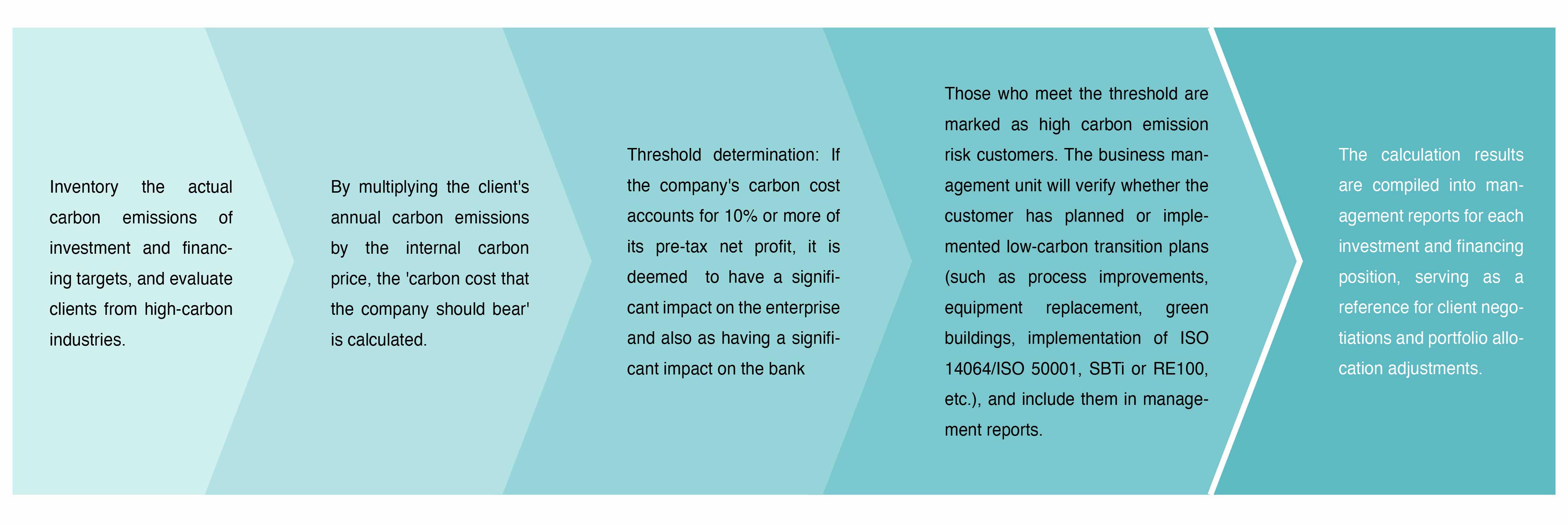
| VII. Employee Workplace Health Management |
|---|
|
Our bank implemented the ISO 45001:2018 international standard system for occupational safety and health management in 2025 and obtained certification. In accordance with relevant domestic regulations, we have established an "Occupational Safety and Health Committee" and formulated management regulations and plans, including the "Occupational Safety and Health Management Plan," "Safety and Health Work Code," "Occupational Safety and Health Management Regulations," and "Occupational Safety and Health Automatic Inspection Plan," applicable to all employees and suppliers. Our bank's measures to promote workplace safety and health are as follows: Workplace Safety Measures: All offices are equipped with access control, security, and fire-fighting facilities. Business premises, in addition to the aforementioned facilities, have security personnel and alarm systems. We conduct quarterly drinking water quality testing and inspections of water dispensers to ensure employee drinking water safety. We conduct semi-annual inspections of carbon dioxide concentration and lighting brightness in the work environment. We conduct semi-annual safety inspections of electrical equipment in the work environment. We submit annual reports for fire safety inspections of the work environment. We submit bi-annual reports for public safety inspections of buildings in the work environment. Every three years, we conduct health checkups for all employees and provide safety and hygiene training. We have established breastfeeding rooms at our Head Office and branches in Nan-Dong, Zhong-Shan, Song-Jiang, Nei-Hu, Xin-Zhuang, Kaohsiung, Min-Quan, Kaohsiung, and Jiu-Ru. The Head Office branch has received Taipei City Government's Excellent/Superior Breastfeeding Room certification, valid from September 1, 2025 to August 31, 2028. The Nan-Dong, Zhong-Shan, Song-Jiang, and Nei-Hu branches have received Taipei City Government's Excellent/Superior Breastfeeding Room certification, valid from September 1, 2023 to August 31, 2026. Healthy Workplace Certification: Locations holding the Healthy Workplace Start-up Mark: Our Head Office and branches in Song-Jiang, Nanjing, Min-Quan, Xin-Zhuang, Jiu-Ru, and Chiayi. Locations holding the Healthy Workplace Promotion Mark: Our branches in Nei-Hu, Fu-Qiang, Ling-Ya, and Kaohsiung. ISO International Standard Certification: ISO 45001 Occupational Health and Safety Management System Certification, valid from December 7, 2025 to December 7, 2028. 
|